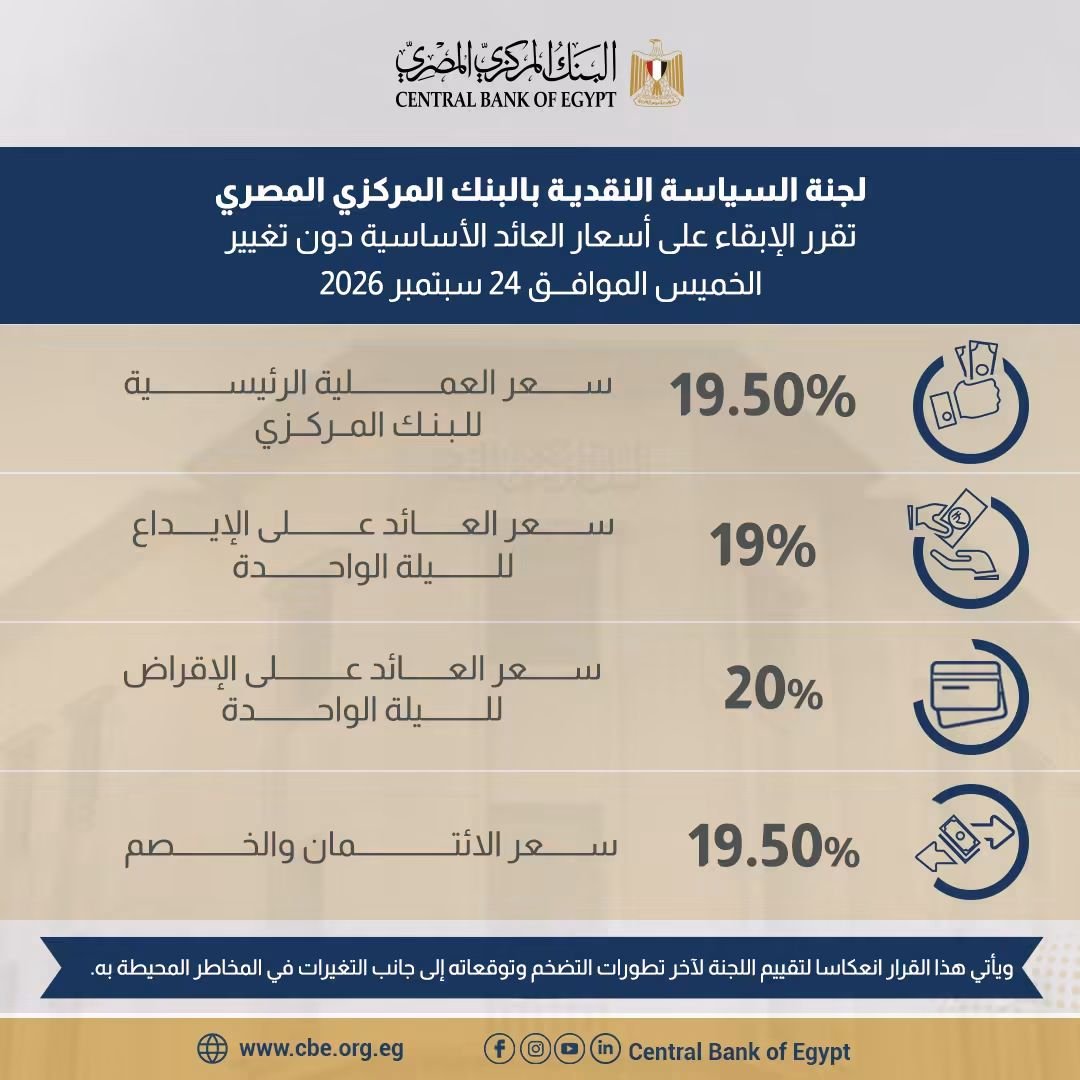
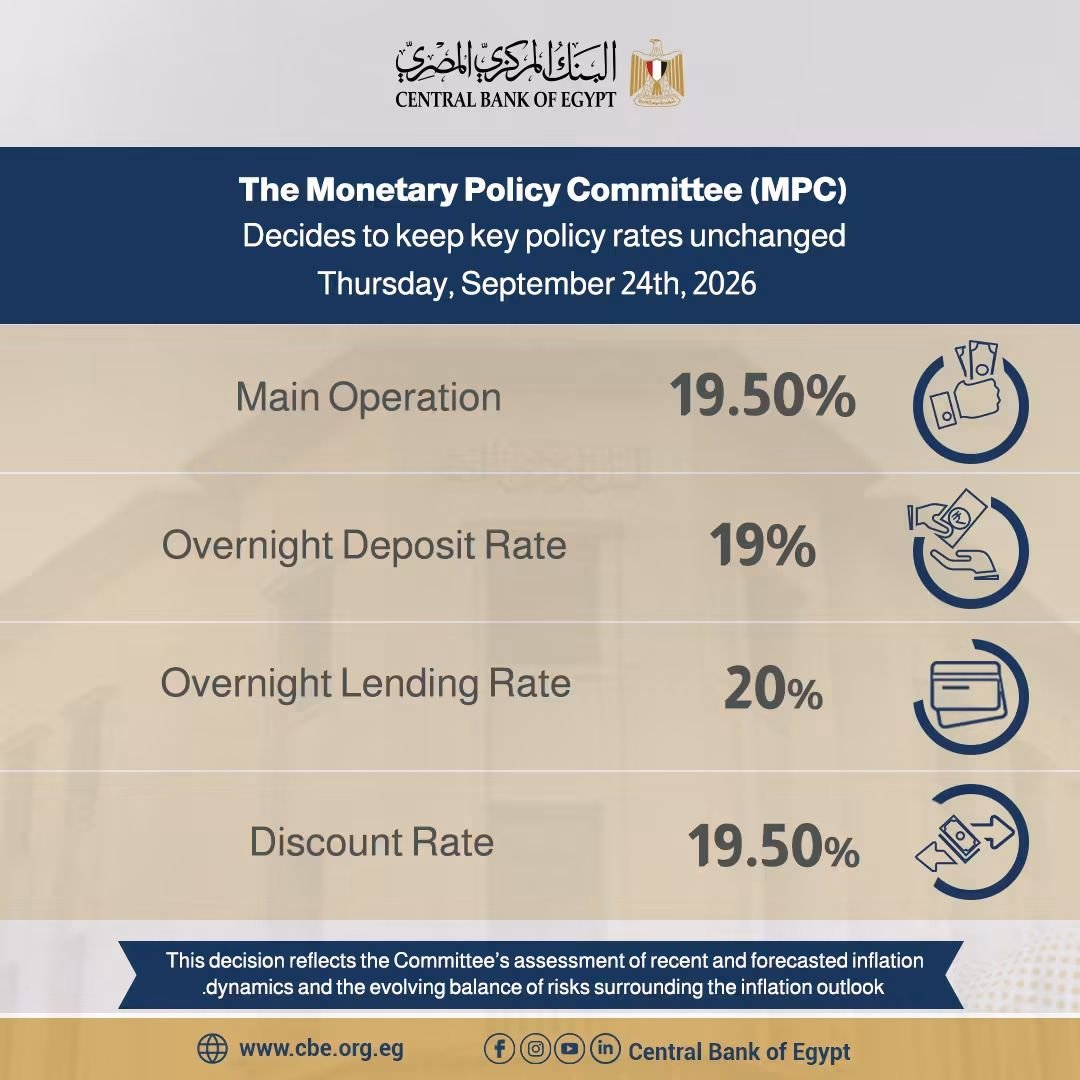
قررت لجنة السياسة النقديـة للبنك المركــزي الإبقاء على أسعار العائد الأساسية دون تغيير. وعليه، تقرر تثبيت سعري عائد الإيداع والإقراض لليلة واحدة وسعر العملية الرئيسية للبنك المركزي عند 19.00% و20.00% و19.50%، على الترتيب. كما تم الإبقاء على سعر الائتمان والخصم عند 19.50%. ويأتي هذا القرار انعكاسا لتقييم اللجنة لآخر تطورات التضخم وتوقعاته إلى جانب التغيرات في المخاطر المحيطة به.
على الصعيد العالمي، شهد النشاط الاقتصادي تباطؤا طفيفا متأثرا بالتقلبات الجيوسياسية وضعف الطلب، إلا أنه ظل مدعوما باستمرار النمو في حركة التجارة والاستثمار. ولا تزال معدلات التضخم مرتفعة بوجه عام رغم تفاوت حدة الضغوط التضخمية بين الاقتصادات، مما دفع البنوك المركزية إلى اتباع سياسات نقدية حذرة اتساقا مع الأوضاع الاقتصادية السائدة. وفيما يتعلق بأسواق السلع الأساسية، شهدت أسعار الطاقة والمنتجات الزراعية ارتفاعا جراء تصاعد حدة التوترات الإقليمية والمخاوف المتعلقة بالإمدادات. وإجمالا، فإن آفاق الاقتصاد العالمي تتسم بعدم اليقين ولا تزال عُرضة لمجموعة من المخاطر يأتي في مقدمتها استمرار التوترات الإقليمية وزيادة تشديد الأوضاع المالية وتجدد اضطرابات سلاسل الإمداد.
وفيما يخص الأوضاع المحلية، واصل النشاط الاقتصادي الحقيقي نموه بوتيرة معتدلة؛ إذ سجل معدل النمو 4.7% في الربع الثاني من عام 2026 مقابل 5.0% في الربع الأول من العام نفسه، وهو ما يرجع بصفة رئيسية إلى تداعيات التوترات الإقليمية. وعليه، بلغ متوسط نمو الناتج المحلي الإجمالي الحقيقي 5.1% خلال السنة المالية 2025/2026، ومن المتوقع أن يظل مستقرا إلى حد كبير عند هذا المستوى خلال السنة المالية 2026/2027. ومع ذلك، لا يزال مستوى الناتج أقل من طاقته القصوى، وإن كان من المتوقع أن يقترب منها تدريجيا خلال النصف الثاني من عام 2027. ومن ثمَّ، تشير فجوة الناتج المتوقعة إلى أن الضغوط التضخمية الناشئة عن جانب الطلب ستظل محدودة في الأجل القصير، مدعومة بقدر مناسب من السياسة النقدية التقييدية.
ومن ناحية تطورات التضخم، شهد المعدل السنوي للتضخم العام تراجعا طفيفا ليسجل 14.5% في أغسطس 2026، مدفوعا بانخفاض تضخم السلع الغذائية الذي حدَّ من أثر الزيادة في تعريفة الكهرباء والإيجارات. وفي الوقت نفسه، ظل المعدل السنوي للتضخم الأساسي مستقرا نسبيا عند 14.9% في أغسطس 2026، مما يعكس استقرار الأسعار بوجه عام في مجموعات السلع الغذائية الأساسية والسلع الاستهلاكية والخدمات. وتشير التطورات السعرية السنوية إلى استمرار الاتجاه النزولي للتضخم، مدعوما بالاستقرار واسع النطاق عبر مكونات سلة الرقم القياسي لأسعار المستهلكين على مدار الأشهر الثلاثة الماضية، إذ سجل المعدل الشهري للتضخم العام سالب 0.4% و0.0% و0.1% في يونيو ويوليو وأغسطس 2026، على الترتيب.
وعلى خلفية التطورات الأخيرة في التضخم والتي جاءت أكثر إيجابية من التوقعات، قام البنك المركزي المصري بخفض توقعاته للتضخم مقارنة باجتماع لجنة السياسة النقدية في أغسطس الماضي. وبناء عليه، من المتوقع أن يشهد المعدل السنوي للتضخم العام استقرارا في الربع الثالث من عام 2026 بعدها يتراجع تدريجيا قبل أن يصل إلى المستهدف البالغ 7% (± 2 نقطة مئوية) خلال النصف الثاني من عام 2027. ومن شأن التعديل النزولي لتوقعات التضخم تعزيز الأوضاع النقدية الحالية التي تتسم بقدر كافٍ من التقييد، الأمر الذي يشكل دعما إضافيا للمسار النزولي المتوقع للتضخم. ومع ذلك، فإن ميزان المخاطر المحيطة بتوقعات التضخم لا يزال يميل نحو الاتجاه الصعودي؛ وذلك انعكاسا لتجدد الأعمال العدائية على الصعيد الإقليمي. ومن شأن هذه المخاطر التأثير على التضخم المحلي من خلال انتقال أثر إجراءات ضبط أوضاع المالية العامة وارتفاع الأسعار العالمية للغذاء بمعدلات تتجاوز التوقعات، لا سيما إذا ظلت الأسعار العالمية للطاقة مرتفعة لفترة ممتدة.
وفي ضوء ما تقدم، قررت لجنة السياسة النقدية الإبقاء على أسعار العائد الأساسية دون تغيير؛ إذ يتيح المستوى الحالي من التشديد النقدي حيزا للحد من المخاطر المشار إليها، مما يحافظ على المسار النزولي المتوقع للتضخم. وسوف تواصل اللجنة تقييم الأوضاع النقدية استنادا إلى التطورات الاقتصادية المؤثرة على مسار التضخم المتوقع في ظل المخاطر المحيطة به، ولن تتوانى عن استخدام ما لديها من أدوات حفاظا على استقرار الأسعار.
قطاع السياسة النقدية
monetary.policy@cbe.org.eg
The Monetary Policy Committee (MPC) of the Central Bank of Egypt (CBE) has decided to keep its key policy rates unchanged. The overnight deposit rate, overnight lending rate, and the rate of the main operation remain at 19.00 percent, 20.00 percent, and 19.50 percent, respectively. The discount rate was also maintained at 19.50 percent. This decision reflects the Committee’s assessment of recent and forecasted inflation dynamics and the evolving balance of risks surrounding the inflation outlook.
Globally, economic activity has moderated, weighed down by geopolitical volatility and subdued demand, yet supported by resilient global trade and investment. Inflation remains broadly elevated—despite divergent price dynamics across economies—prompting central banks to maintain cautious monetary policy stances aligned with their respective economic conditions. Commodity markets have experienced a broad-based upturn, with energy and agricultural prices driven higher by escalating regional tensions and supply concerns. Overall, the global outlook remains uncertain and susceptible to risks stemming from prolonged geopolitical tensions, tighter financial conditions, and renewed supply chain disruptions.
Domestically, real economic activity continued to moderate, with growth recording 4.7 percent in Q2 2026, down from 5.0 percent in Q1 2026, mainly attributable to the adverse impact of regional tensions. Accordingly, real GDP growth averaged 5.1 percent in FY 2025/26 and is expected to remain broadly stable near this level in FY 2026/27. Nonetheless, output remains below its potential and is projected to gradually converge toward full capacity by H2 2027. Accordingly, the projected output gap suggests that demand-side inflationary pressures will remain limited in the short term, supported by an adequately tight monetary policy stance.
Regarding inflation outturns, annual headline inflation eased marginally to 14.5 percent in August 2026, primarily driven by declining food inflation, which offset increases in electricity tariffs and housing rents. Meanwhile, annual core inflation remained relatively stable at 14.9 percent in August 2026, reflecting broadly stable price developments across core food, retail items and services. Overall, annual price dynamics reflected continued disinflation, supported by broad-based price stability across the CPI basket over the past three months. This is evidenced by monthly headline inflation recording negative 0.4 percent, 0.0 percent and 0.1 percent in June, July, and August 2026, respectively.
Given these inflation developments, which turned out more favorable than expected, the CBE revised its inflation forecast downward relative to the August MPC meeting. Accordingly, annual headline inflation is projected to stabilize on average in Q3 2026, before gradually decelerating then converging toward the target of 7 percent (± 2 p.p.) during H2 2027. The downward revision to the inflation forecast reinforces the current monetary stance that is sufficiently tight, further supporting the forecasted disinflation path. Nonetheless, the balance of risks surrounding the inflation outlook remains tilted to the upside, reflecting the resurgence of regional hostilities. These risks could feed into domestic inflation through a higher-than-anticipated passthrough from fiscal consolidation measures and international food prices, particularly if global energy prices remain elevated for an extended period.
In light of these dynamics, the MPC decided to keep the key policy rates unchanged, given that the current degree of policy restrictiveness serves as a buffer against the above-mentioned risks, preserving the projected disinflation path. Looking ahead, the Committee will continue to evaluate its monetary stance in light of evolving economic conditions, the forecasted inflation trajectory, and the prevailing balance of risks. The MPC will remain vigilant toward risks and developments affecting the inflation outlook and stands ready to deploy all available policy tools to ensure price stability.
Monetary Policy Sector
monetary.policy@cbe.org.eg